


I really like the puzzle light. It really illuminates the glare & makes puzzling much more enjoyable! It just took about a month to arrive!

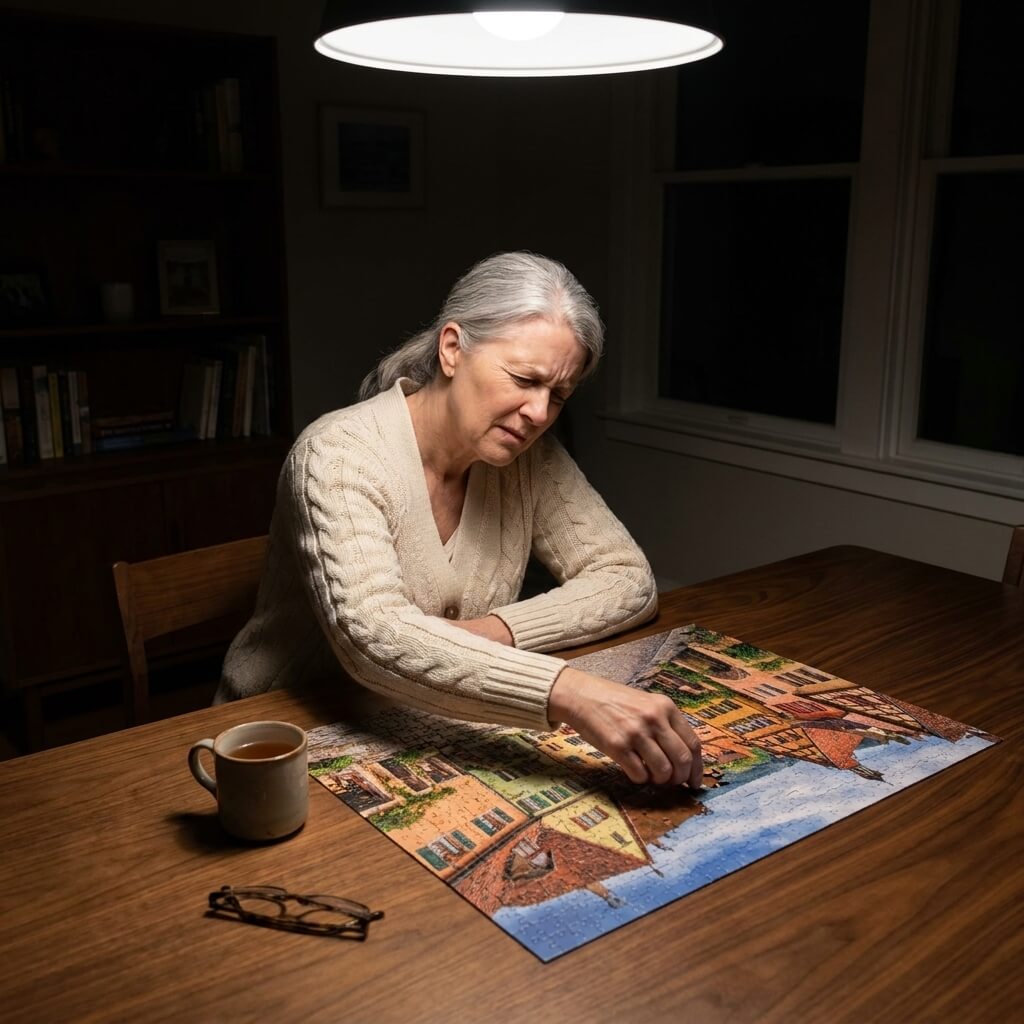
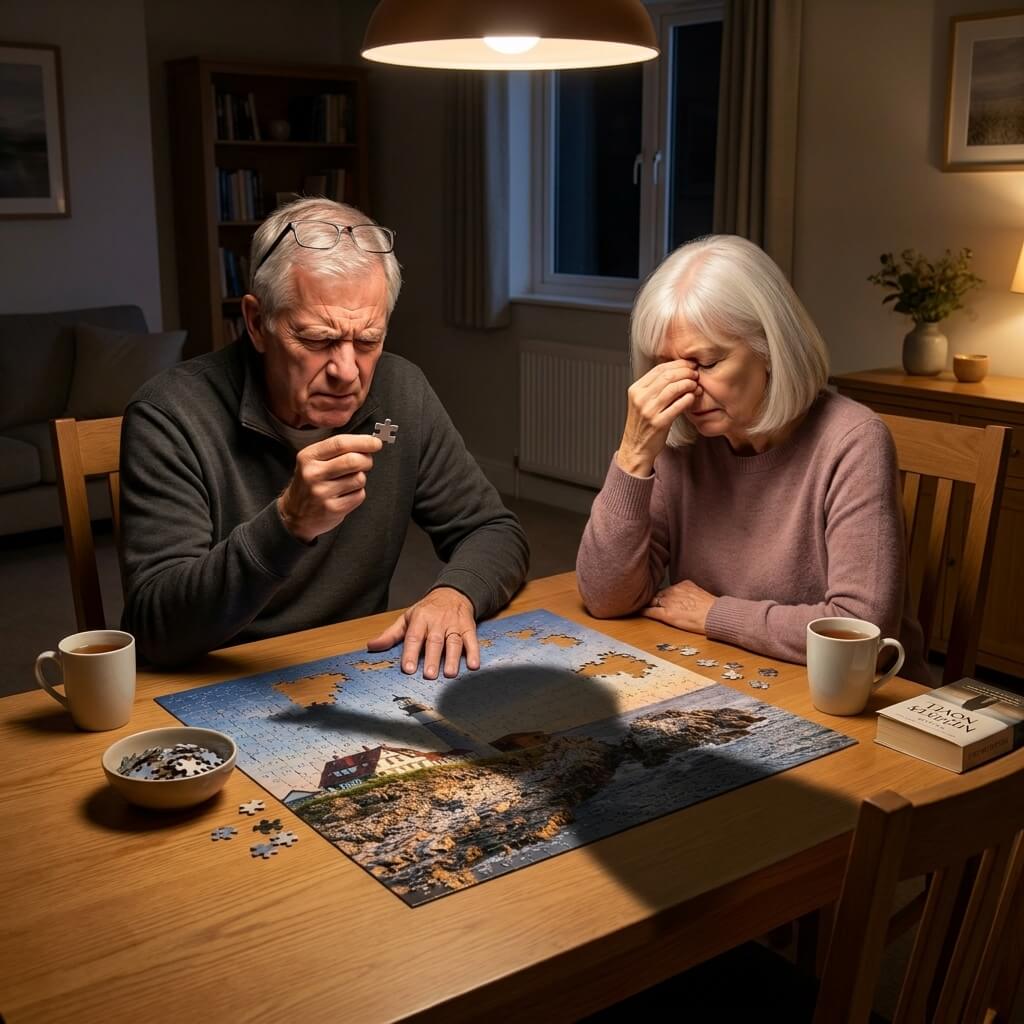
I'm always working in my own shadow.

Sometimes I sit there and just stare at the pieces trying to find that ONE piece. Then later I'll walk past the puzzle and suddenly see that 'missing' piece!

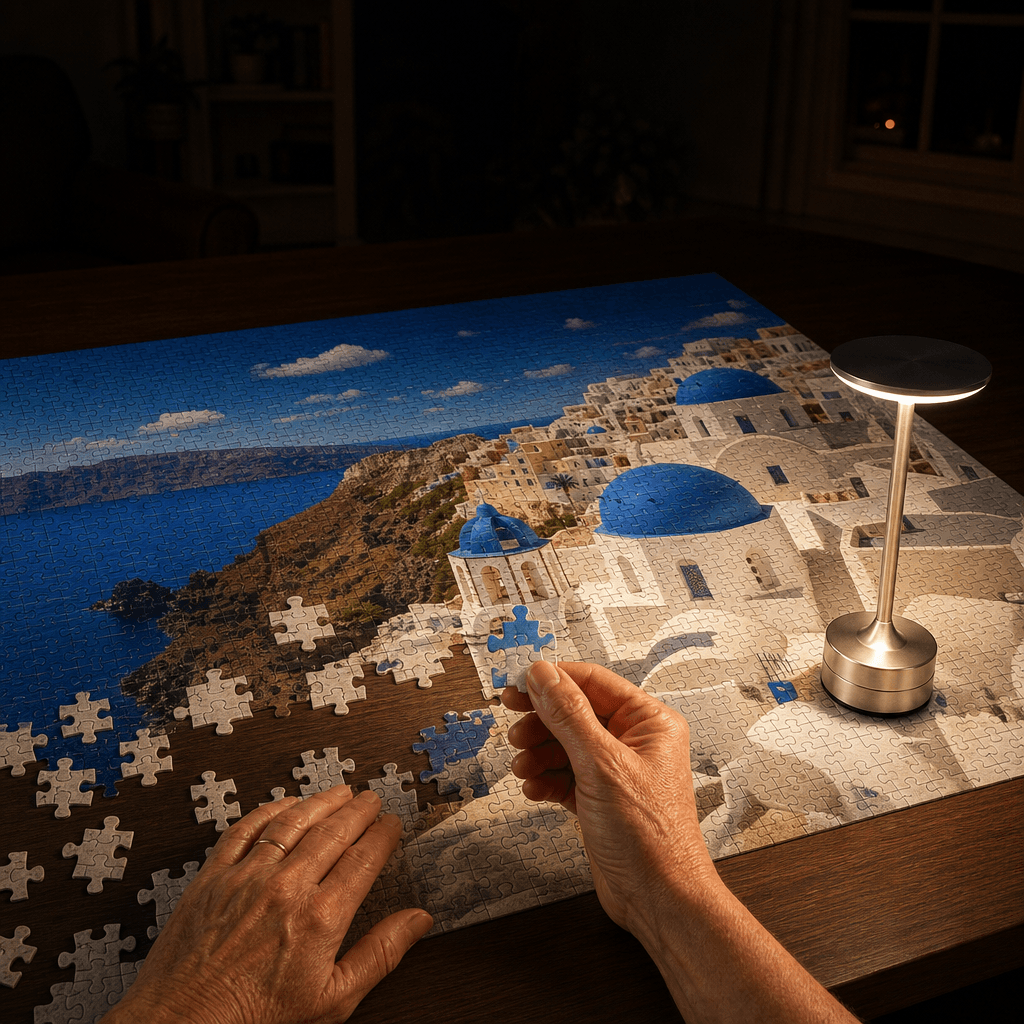
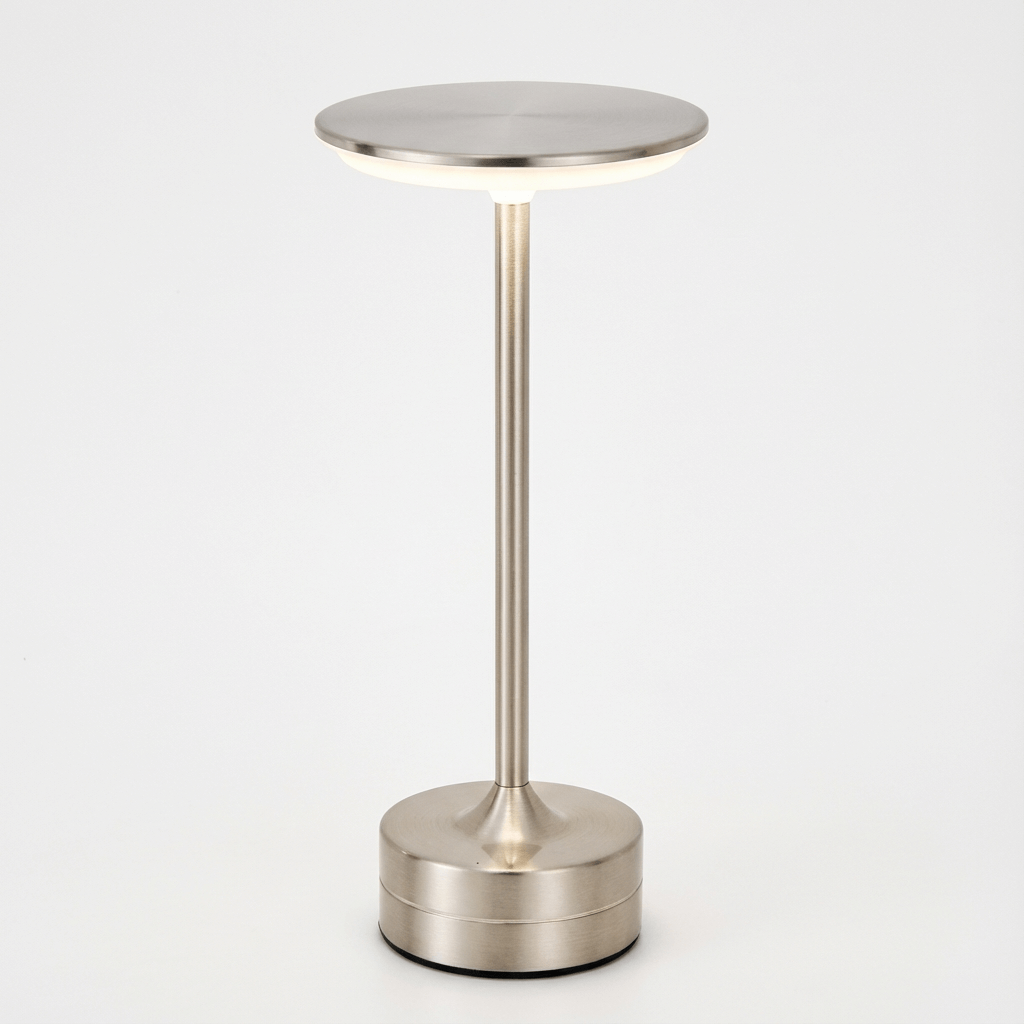
Meet EMBAR
That one change — where the light comes from — removes the shadow. The light travels from the side, at table level, under your hands and below your line of sight. Your body can never get between it and the pieces. EMBAR is the lamp built to put the light exactly there.

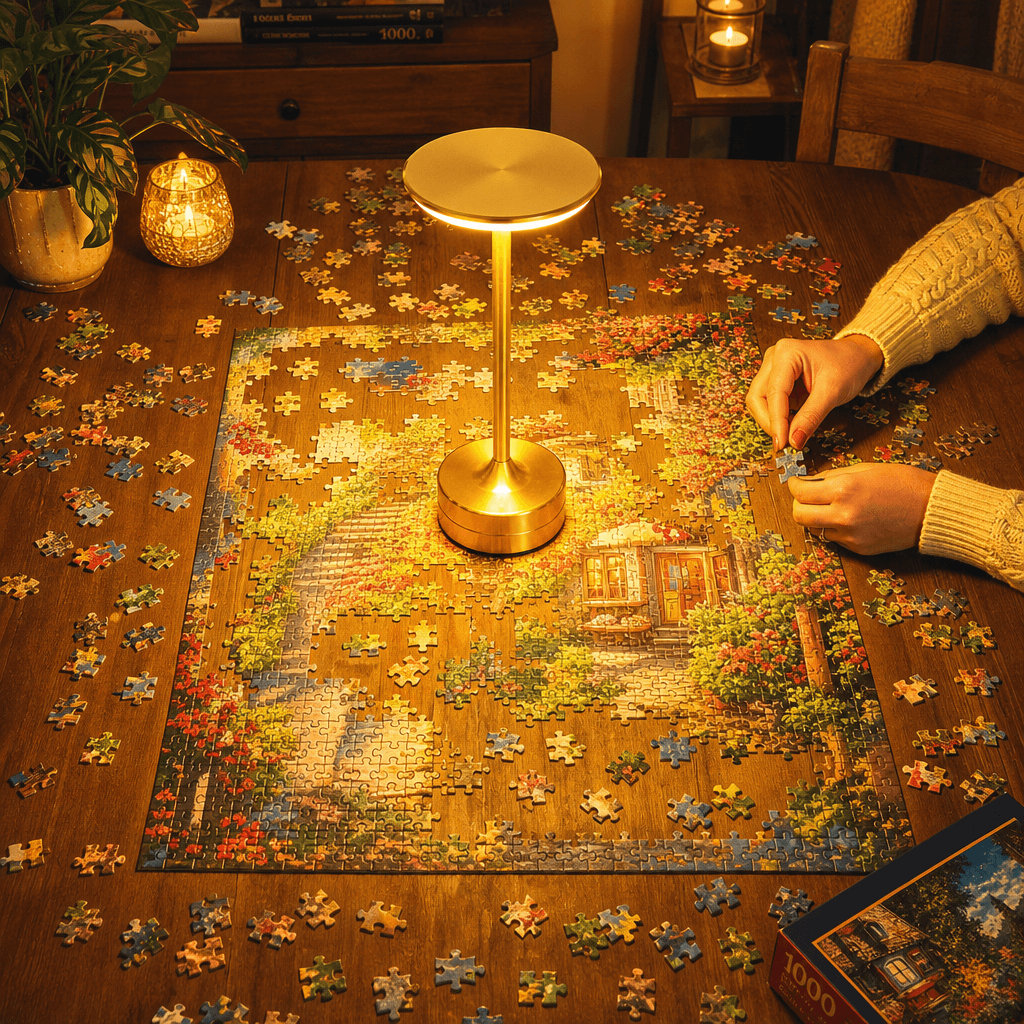

Was getting frustrated with my puzzle. Saw an ad for this lamp and thought maybe that's my issue. Sat down and found some pieces in the first 5 minutes. Lighting was everything.

It helped me finish a puzzle I was having trouble seeing the pieces. This lamp is a game changer.
Make puzzle pieces easier to see with table-level light built for piece shapes, color changes, and hard-to-see edges, without running a cord across your table.
Built for puzzle night first. Useful long after the puzzle is done. EMBAR moves easily to Mahjong, cards, craft projects, bedside reading, and early mornings when you want just enough light where you are.
30 Day Money Back Guarantee
Couldn't load pickup availability
"As a lady of a certain age, I find when playing cards or mahjong with friends, some of us need a little more light to see what we're doing. These lovely little lights sit perfectly on a card table and provide that extra bit of light without having cords in the way."
The EMBAR lamp runs for 15+ hours on a single charge at medium brightness—more than enough for even the longest game marathons. Recharging is simple: just plug in the included USB cable overnight and you're ready for your next game night.
Yes! The compact base (only 4.5" diameter) fits on any table without taking up valuable playing space. The weighted design keeps it stable even on folding card tables, and the soft-touch base won't scratch wood, glass, or laminate surfaces.
No! The EMBAR has a built-in rechargeable battery. Just plug it in overnight using the included USB cable (works with any USB wall adapter or computer). No batteries to buy, ever.



Overall rating: 4.4 / 5 from 976 reviews.
I really like the puzzle light. It really illuminates the glare & makes puzzling much more enjoyable! It just took about a month to arrive!

Exceeded my expectations. Love it. Only negative was the cost.

I got two lamps. The top at one is not correct. The plastic light cover sticks out further than the top ring and looks bad. The other lamp is ok. See photos. Can you send me a new one please? I tried to press it back into place, but it will not move. Phone is 513 312-3989 Chuck Lane 886 Castlebay Drive Cincinnati, Oh 45245

Make it bigger and brighter

I bought two and both lamps are super temperamental. Sometimes they work and sometimes they don’t and I was gonna gift one to my sister, but it doesn’t stay on when I turn it off and come back an hour later it doesn’t work. I have to recharge it. it doesn’t charge well just trying to get it on in office is a lot but my first one didn’t worked for one second or one minute and then it doesn’t work ever ever since then.

Not only dies this lamp shine light on the puzzle, it changes the while aesthetic of the room.

The one came broken. Both, after being completely charged, don’t turn on. I had such high hopes, but am completely disappointed in this product. Packaging HAS to be sturdier at the very least!

I bought the four pack and I’m happy I did. We are a big gaming family and can spend an entire day playing back to back scenarios. We use two at a time, recharge and trade out with the second two. Very happy with the size, mobility and choice of three different light settings. Would be nice if the charge lasted a bit longer, but as I stated before, we probably play for a more extended period than most. I’m happy with my purchase.

Use mine as a side table light

Package arrived in bad shape. Box was crushed. Unsure if it is broken but something loose is rattling inside the base

Broken, lopsided. Trying to return. Have sent photos and videos twice already. Please someone tell me how to return. I ordered 3.

The light is good—- need another one.

As an ardent puzzler, I was especially pleased to receive a pair of these lamps as a surprise gift. They have already shown their usefulness in providing close-up true colors on small pieces. I regret that the USB connections are so short, though. It can be a challenge finding a place for them to charge. Other than that liability, I am delighted to have them.

Bought 2 for family puzzling. Getting another for manicure tasking.

Great light! I like the different tones but also that it can be dimmed or brightened. Helpful in a power outage as well.

The EMBAR lamp is excellent. I am glad that I got it I’m an avid puzzler .

This little lamp works surprisingly well! I use it for extra lighting while doing my jigsaw puzzles. Only thing I would suggest is a longer cord for charging.

We love these lamps! Takes the glare off the pieces - much easier to see!

Love love love! This little lamp is amazing. Just heading to purchase more for the fam who are all trying to sneak mine away!

Works well and easy to move around

Excited to use this with my next puzzle. I love that there are three light settings AND that it’s dimmable. I bought a couple so that we can also have them on hand in the event we have a power outage. The ability to recharge them with our power supply was a plus.

Simple, functional design. It can be used to light small rooms aside from good lighting for puzzles.

We love the lamps they work great,

Great lamp! I was struggling with my puzzles in the evening, trying to find the right light. I was dragging over tall lamps with electrical cords across the floor , but the light was never quite where I needed it. I love that this has no cord and I can shift it around the table wherever I need it. It was easy to charge and has three light settings, tapping the top. I should’ve ordered two right away. It took over a week to arrive, but it came in perfect condition and it was worth the wait. I find the size perfect, and it looks decorative on the table when I don’t have a puzzle there

This lamp is pretty cool. Three different tones by quick touch, dimmable by long touch, and touch on and off by quick touch. Being cordless is perfect for games or puzzle tables. Also handy as a bed-side light.

Great little light. Helps me distinguish the colours. Gotta keep working on the puzzle.

Works great, rechargeable, light weight. Perfect for that little extra white

Great light

I bought this little lamp for puzzles at camp. It’s quite dark in there and i needed a lamp that doesnt need to use electricity. When I opened it i loved it and ended up using it on my little table where i drink coffee at home. I now have to order another for camp puzzles. Lol. I Love that it has 3 light settings. Great lamp. Might need one for camping too 🤔

Provides some light without being too much.

Very happy with these lamps!

Mine was unfortunately damaged in shipping. They are sending me a new one. I can’t wait to get it as our family is a puzzle challenged family. Always one going on the puzzle table. Great family entertainment.

This lamp is such a game changer for me as I love doing puzzles in various locations around the house. I can use this lamp anywhere, with no wires. It charges up quickly. I love this purchase!

Love this lamp and the 3 levels of light it gives. I'm working during a power outage on Manitoulin Island. No! I dont miss the TV🤣 (Do you make a 10" diameter lamp?) I'd buy that!

Very nicely designed product. Simple to charge and use and helps with, in our use, tabletop gaming and artwork. Very nice product. I must comment that the shipping method was less than ideal. The two boxes were simple wrapped side by side in bubble wrap, then wrapped and taped in a shipping bag without any reinforcement. During transit, one of the two lamp boxes was partially crushed between lamp's base and lamp itself although as it turned out no damage was done to the shaft nor any metal part dented. The plastic base though was depressed slightly into the metal base and when I inserted the USB cord, it slipped and the socket moved out of place. After removing the base, and reinserting it, the socket was again in alignment and the cord could be inserted without trouble.

It work great

Perfect lighting!

Lamps work well with my puzzle table. It is really nice to move the light where I need it the most, without a cord getting in the way.

Was getting frustrated with my puzzle. Saw an ad for this lamp and thought maybe that’s my issue. Sat down and found some pieces in the first 5 minutes. Lighting was everything plus it looks beautiful in my area. Highly recommend.

I was concerned the light would cause glare on the puzzle pieces. It doesn't! I love that it's rechargeable - no wires! I can move it wherever I need it.